The Untamed Goddess
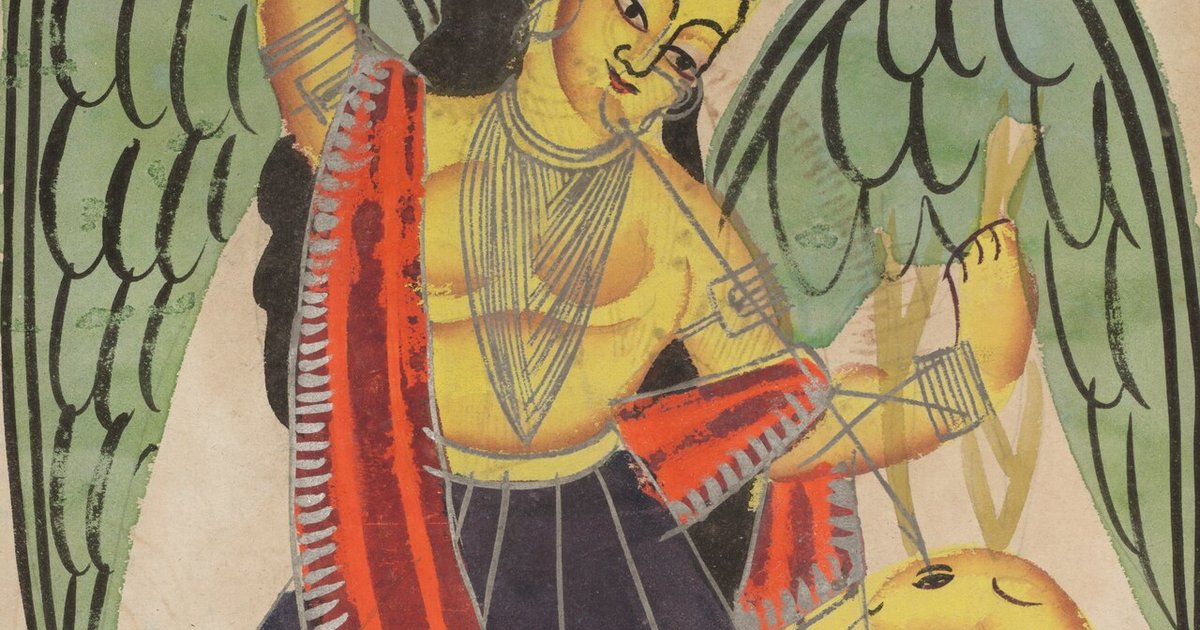
Among the twelve Olympians, Artemis stands apart. She does not dwell in the golden halls of Mount Olympus by choice. Her domain is the wilderness — dense forests, mountain ridges, rushing rivers, and moonlit clearings where deer drink and wolves howl. She is the goddess of the hunt, the protector of young women and wild animals, the bringer of sudden death, and the embodiment of a fierce, unyielding independence that no god or mortal could compromise.
Artemis is one of the most widely worshipped deities of the ancient Greek world, with temples and cults spanning from mainland Greece to Asia Minor. The Temple of Artemis at Ephesus was one of the Seven Wonders of the Ancient World. Her worship predates many of the Olympian gods, with roots in pre-Greek goddess traditions that associated the feminine divine with wild nature, the moon, and the liminal boundaries between civilization and the untamed.
Birth and Early Life
Artemis was the daughter of Zeus and the Titaness Leto. Her twin brother was Apollo, god of the sun, music, and prophecy. But Artemis came first.
According to the Homeric Hymn to Apollo and later sources, Leto's pregnancy drew the wrath of Hera, Zeus's jealous wife, who forbade any land from giving Leto shelter to give birth. Leto wandered the earth in agony until she reached the floating island of Delos, which was not technically "land" and thus not bound by Hera's prohibition.
On Delos, Leto gave birth to Artemis first. Then, remarkably, the newborn Artemis immediately assisted her mother with the birth of Apollo. This detail is significant: from the moment of her birth, Artemis was a protector and midwife, a guardian of women in their most vulnerable moments. This role would define one of her most important domains — the protection of women during childbirth.
As a young child, Artemis went to her father Zeus and made a series of extraordinary requests. According to the poet Callimachus (3rd century BCE), she asked for:
- Eternal virginity — freedom from marriage and romantic entanglement
- A bow and arrows equal to Apollo's
- A hunting tunic short enough for running through the forest
- Sixty ocean nymphs as her attendants
- Twenty river nymphs to care for her hounds and bow
- All the mountains in the world as her domain
- One city only (she preferred the wild)
- The ability to bring light (her role as moon goddess)
Zeus, delighted by his daughter's clarity and boldness, granted every request. From that moment, Artemis was beholden to no one.
The Virgin Huntress
Artemis's virginity is not simply sexual abstinence. In the context of ancient Greek religion, her virginity represents complete autonomy — freedom from the social structures that bound most women (and many goddesses) to husbands, households, and the expectations of patriarchal society.
Unlike Athena, whose virginity is associated with intellectual self-containment, or Hestia, whose virginity represents domestic purity, Artemis's virginity is wild and active. She runs through forests. She hunts. She bathes in forest pools with her nymphs. She lives on her own terms, answering to no one.
Her attendant nymphs were required to maintain the same vow of chastity. When the nymph Callisto was seduced (or assaulted) by Zeus — who disguised himself as Artemis to get close to her — Artemis discovered Callisto's pregnancy and banished her from the company. In some versions, Artemis transformed Callisto into a bear; in others, Hera performed the transformation. Either way, the message was unambiguous: Artemis's circle admitted no compromise.
This severity is often read as cruelty by modern audiences, and the punishment of Callisto — a victim of Zeus's deception — echoes the injustice of Athena's punishment of Medusa. But within the logic of Greek mythology, Artemis's strictness reflects the absoluteness of her domain. Wildness cannot be halfway. Independence cannot be partial. The boundary is total, and crossing it has total consequences.
Protector of the Young and Vulnerable
Despite her fierce reputation, Artemis is fundamentally a protective deity. Her protection extends to:
- Young women — Artemis guards girls during the transition from childhood to adulthood, the dangerous liminal period before marriage
- Women in childbirth — Having assisted at her own brother's birth, Artemis was invoked by women in labor. She could ease or intensify the pains of childbirth.
- Young animals — As goddess of the wild, Artemis protected the young of all species, ensuring the continuation of wildlife
- Hunters who honored proper conduct — Artemis blessed ethical hunters who respected the animals they killed and took only what was needed
This protective aspect creates a fascinating tension in her character. She is both the huntress who kills and the guardian who preserves. She takes life in the hunt and protects life in the forest. This paradox reflects the Greek understanding of nature itself: sustaining and destroying, nurturing and lethal, beautiful and utterly indifferent to human comfort.
The Calydonian Boar Hunt
One of the most famous episodes in Greek mythology involving Artemis is the Calydonian Boar Hunt. When King Oeneus of Calydon failed to include Artemis in his harvest sacrifices to the gods, she sent an enormous, savage boar to ravage his kingdom — destroying crops, killing livestock, and terrorizing the population.
Oeneus's son Meleager assembled the greatest heroes of Greece to hunt the boar: Theseus, the Dioscuri (Castor and Pollux), Jason, Peleus, Telamon, and notably Atalanta, a female hunter devoted to Artemis. The hunt itself became legendary, with multiple heroes wounded or killed by the boar before Atalanta drew first blood with an arrow and Meleager delivered the killing blow.
Meleager awarded the boar's hide to Atalanta, honoring her as the first to wound the beast. This enraged his uncles, who considered it dishonorable for a woman to receive the prize. The resulting conflict led to Meleager killing his uncles, which in turn led to his mother Althaea causing his death by burning the magical log that was tied to his life force.
The entire cascade of tragedy — the boar, the hunt, the deaths — originated from a single act: failing to honor Artemis. The message was unmistakable: neglect of the goddess of the wild brings the wild crashing into your civilization.
Actaeon: The Hunter Who Saw Too Much
The myth of Actaeon is among the most chilling in Artemis's cycle. Actaeon was a skilled hunter who, while wandering through the forest, stumbled upon a hidden pool where Artemis and her nymphs were bathing naked.
Whether Actaeon's discovery was intentional or accidental varies by source. In Ovid's Metamorphoses, it was pure chance — a wrong turn in the woods. But Artemis's response was immediate and absolute: she splashed water in his face and transformed him into a stag. Unable to speak, unable to identify himself, Actaeon was then hunted and torn apart by his own hounds, who did not recognize their master in his animal form.
"So the hounds tore their master, covering him with wounds, the image of a stag. And they say that the wrath of quiver-bearing Diana [Artemis] was not satisfied until his life was ended by many wounds." — Ovid, Metamorphoses, Book III
The myth of Actaeon encodes a powerful warning about transgressing boundaries. The wild is not a spectacle for human consumption. Certain sights — certain forms of knowledge, certain intimacies — carry a price. To see the goddess in her unmediated wildness is to be destroyed by it, not because she is cruel but because the human frame cannot contain what it has witnessed. Actaeon becomes an animal because he has crossed the line between the human and the wild, and there is no crossing back.
Artemis and the Moon
Artemis's association with the moon developed over centuries, eventually becoming one of her defining attributes. In the earliest Greek sources, the moon goddess was Selene, a separate deity. Over time, Artemis absorbed Selene's lunar associations, becoming the goddess of the moon just as her twin Apollo became the god of the sun.
The moon connection reinforces several of Artemis's core themes:
- Nighttime and the wild — The moon illuminates the forest at night, Artemis's primary domain
- Cyclical transformation — The moon's phases mirror the cycles of nature that Artemis governs
- Feminine mystery — The moon's association with menstrual cycles connects Artemis to female biology and the transitions of womanhood
- Light in darkness — Unlike Apollo's blazing sun, Artemis's light is subtle, silver, and indirect — powerful enough to navigate by, but preserving the essential mystery of the night
Diana: The Roman Artemis
When the Romans adopted Greek mythology, Artemis was identified with the Italian goddess Diana. Diana's worship was already ancient in Italy before the Greek identification, centered around the sacred grove at Lake Nemi south of Rome, where a mysterious ritual persisted for centuries: the priest of Diana's grove held his office only until another man killed him and took his place.
This savage succession ritual fascinated the Victorian scholar James George Frazer, whose monumental work The Golden Bough (1890) used it as a starting point for an exploration of myth, magic, and religion that would influence an entire generation of writers and thinkers, including T.S. Eliot.
As Diana, the goddess retained all of Artemis's attributes — the hunt, the moon, virginity, protection of women — but gained additional Roman associations with crossroads, the lower classes, and slaves. Diana was particularly popular among Rome's common people and enslaved populations, who saw in her fierce independence a divine model for those outside the structures of power.
Artemis's Fierce Nature and Divine Wrath
Artemis is not a gentle goddess. Her myths are full of swift, merciless punishment for those who offend her:
- Niobe — When Niobe boasted that she was superior to Leto because she had fourteen children while Leto had only two, Artemis and Apollo killed all fourteen of Niobe's children with their arrows. Artemis killed the daughters; Apollo killed the sons. Niobe was turned to stone, weeping eternally.
- Orion — The giant hunter Orion is the only male figure with whom Artemis formed a close bond. In most versions, his death results from either Apollo's jealousy (he tricked Artemis into shooting Orion from a distance) or Orion's own transgression (attempting to assault Artemis or one of her nymphs). In grief, Artemis placed Orion among the stars as a constellation.
- Agamemnon — Before the Trojan War, Agamemnon killed a deer in Artemis's sacred grove and boasted he was a better hunter than the goddess. Artemis becalmed the winds, trapping the Greek fleet in the harbor at Aulis. The only remedy: Agamemnon must sacrifice his daughter Iphigenia. In some versions, Artemis substituted a deer at the last moment and spirited Iphigenia away to serve as her priestess.
These acts of divine wrath follow a consistent pattern: Artemis punishes arrogance, boundary violation, and disrespect for the natural world. Her anger is not arbitrary — it is the enforcement of sacred limits. Cross the line, and the consequences are absolute.
Why Artemis Still Resonates
In an era of renewed attention to women's autonomy, environmental consciousness, and the questioning of patriarchal structures, Artemis speaks with particular force. She is the goddess who chose freedom over marriage, wilderness over civilization, action over domesticity. She protects the vulnerable while demanding respect for boundaries. She embodies the principle that independence is not a phase to grow out of but a sacred state worthy of divine protection.
Artemis does not negotiate. She does not compromise. She does not explain herself to those who challenge her. She simply is what she is — wild, free, and lethally serious about the boundaries that make freedom possible. In a world that still struggles with the concept of women's full autonomy, the goddess of the hunt continues to run through the forest, bow in hand, answerable to no one.